
What to Remove From a Vegetable Garden After the First Frost
Cover: AI-generated illustration of a generic vegetable-bed cleanup after frost. It is not a photograph of a UKOKE product or a garden trial.
Short answer: After frost, remove finished annual vegetable plants and any diseased debris, but do not strip every bed to bare soil automatically. Compost healthy plant material only if it is suitable for your compost system; dispose of plants with suspected disease according to local guidance. Keep living cold-tolerant crops and intentional cover crops, and treat perennial herbs separately from annual vegetables. Frost is a cue to inspect the bed, not a universal cleanup deadline.
Start by identifying what is actually finished
A light frost does not affect every crop in the same way. The University of Minnesota Extension notes that warm-season vegetables such as tomatoes, peppers, and beans are easily damaged by freezing temperatures, while some root crops tolerate light frosts. If a plant is still producing edible food, harvest it when appropriate before a hard freeze rather than assuming the first cold night ended its season.
Once an annual crop is spent, remove the above-ground plant material and fallen fruit that could attract pests or interfere with next season’s bed preparation. Pull or cut plants carefully so you do not disturb nearby crops you intend to keep. If roots are difficult to remove, avoid force that damages a raised bed liner, irrigation tubing, or neighboring perennial roots; cut the stem and ask a local Extension office about the crop-specific approach.
Separate healthy residue from possible disease
Inspect leaves and stems before adding them to a compost pile. Brown or frost-damaged foliage alone does not identify a disease, so do not diagnose a pathogen from color after a cold night. Look for a known problem from the growing season, such as a confirmed blight or powdery mildew diagnosis, and follow local plant-disease guidance. Minnesota Extension recommends removing and disposing of diseased plant material to reduce the chance that disease survives winter and returns next season.
Healthy debris can often be composted or reused as mulch, but the right choice depends on the material and the compost process. If you cannot tell whether a plant is diseased, keep it out of a home compost pile until you get advice. Do not assume a small backyard pile heats enough to destroy every pathogen. Follow your municipality’s yard-waste rules for diseased plants and avoid burning garden debris unless local regulations explicitly allow it.
Do not mistake “tidy” for “ready”
A vegetable bed does not have to be bare for winter. If a cold-tolerant crop is still alive, protect it using crop-specific local advice. If you planted a cover crop, follow that species’ timing and termination guidance rather than pulling it just because other plants froze. If the bed is empty, a mulch layer may help protect soil from erosion and reduce weeds; Minnesota Extension recommends a 2-to-4-inch mulch layer for raised beds. That regional guidance is an example, not a universal depth for every climate, material, or plant.
Healthy perennial herbs are not the same as annual tomato vines. Identify the plant and learn whether its stems should be cut back or left for winter before trimming. In a mixed bed, mark plants you are keeping, then remove only the finished annual crops and debris that needs disposal.
A practical post-frost checklist
- Identify each crop and whether it is annual, perennial, still producing, or intentionally planted to overwinter.
- Harvest edible produce that is ready before a hard freeze.
- Remove finished annual plants and collect fallen fruit.
- Separate healthy residue from plants with a known or suspected disease issue.
- Compost healthy material only when your system and local guidance are suitable; dispose of diseased plants as directed.
- Protect bare soil with an appropriate mulch or cover crop rather than tilling automatically.
- Clean and store hand tools dry, and keep sharp cutting tools safely closed or covered.
Use hand tools only for work they are designed to do. A small trowel or cultivator can help with light bed cleanup, but a compact kit is not a substitute for a larger tool or professional help when roots, stakes, or structures resist removal. Wear gloves suited to the task, keep other people away from cutting work, and follow the tool maker’s care instructions.
Related hand-tool option
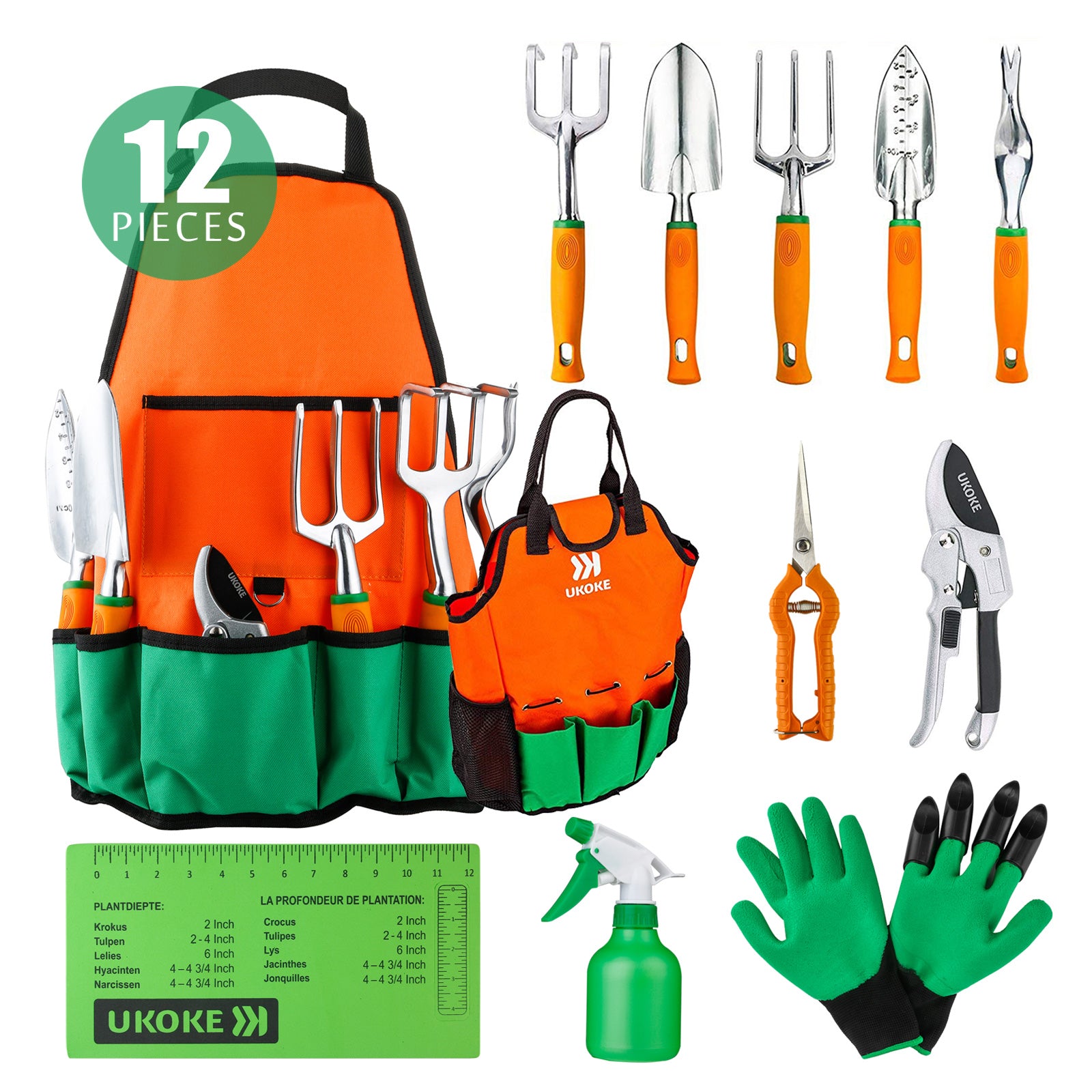
Ukoke 12-Piece Aluminum Garden Tool Kit and Gardening Apron · Model UGP02G
The listing identifies five aluminum hand tools, pruning shears, a snip, gloves, apron, and kneeling pad. A trowel, weeder, rake, spade, and cultivator are among the named tools. This is a general hand-tool set, not a specialized plant-disease treatment kit.
Listed price: USD $34.99 (checked November 18, 2026); the page shows $50.00 as the comparison price. The visible listing says sold out while embedded availability data says in stock, so availability is uncertain; check the product page.
View product and current availability
Price and availability may change; see product page.
Sources and limits
- University of Minnesota Extension, “Fall garden care that pays off” (October 26, 2026) — crop response to freezing, disease cleanup, healthy debris, raised-bed mulch, and preserving some stems.
- UKOKE garden tool set product listing — product identity, model, contents, official image, and listed price, checked November 18, 2026.
Regional climate and disease conditions vary. For a suspected vegetable disease or local disposal rule, contact your county Extension office or waste program. No fertilizer, pesticide, or yield result is prescribed or promised.
Prepared with Codex assistance. No garden trial or independent human review is claimed.