
What Jewelry Should You Keep Out of an Ultrasonic Cleaner?
Cover: AI-generated conceptual illustration of jewelry and an ultrasonic cleaner. It is not a product photograph or a demonstration that the pictured items are safe to clean.
Quick answer: Keep pearls, coral, amber and other organic gem materials out of an ultrasonic cleaner. Avoid the machine for stones with known or possible fracture filling, oil, resin, wax, coating or other treatment unless a qualified jeweler confirms the exact piece is suitable. A loose stone or unknown setting is also a reason to stop. If you cannot identify the gem and its treatment, use the item's care instructions or ask a jeweler instead of testing it in the tank.
The small bubbles and vibration can loosen dirt from suitable items, but “jewelry” is not one material. A gold setting may hold a porous gem, an older repair, a coating or a stone that has loosened over time. Identify the whole piece before choosing a cleaning method.
Do not ultrasonically clean these materials
The Gemological Institute of America (GIA) advises against ultrasonic cleaning for organic gem materials including pearls, coral, amber, shell cameos, jet and similar porous materials. Heat and cleaning solutions can damage them. Keep a pearl necklace, coral earrings or amber pendant out of the bath even if the metal parts look sturdy.
GIA also warns against using an ultrasonic cleaner on gems whose surface-reaching fractures have been filled. Emeralds may have oil, resin or wax in fractures; diamonds can be fracture-filled as well. The filling is a treatment, and vibration or cleaning solution may damage or remove it. Do not infer treatment from appearance. If the jewelry paperwork does not make the treatment clear, treat compatibility as unknown.
Some gems are sensitive to heat or temperature change, and some are treated or coated. GIA lists examples such as opal, turquoise, lapis lazuli and malachite among stones that need particular caution. This is not a complete identification chart. Similar-looking stones can have different properties and treatments, so use the care advice for the exact gem rather than a broad internet list.
Check the setting as well as the stone
Even a durable stone may be at risk if its prongs, bezel, glue or mounting are damaged. GIA notes that ultrasonic vibration can loosen stones in their settings. Before any cleaning, look for movement, bent prongs, missing accent stones or a rattling sound. A visual check cannot certify a setting; if anything seems loose, do not put the piece in the cleaner.
Be cautious with antique jewelry, glued pieces, multi-stone settings, watches, plated or coated surfaces, and jewelry with repairs you cannot document. This is a practical stop list, not a claim that every item in those categories is always unsafe. Follow the maker’s instructions for the exact item and have a jeweler assess uncertainty.
Eyeglasses need a separate decision
Do not assume a cleaner that is marketed for jewelry is suitable for prescription glasses. ZEISS says its own professional ultrasonic cleaning is intended for frames after the lenses have been removed, and advises against putting glasses in a jewelry ultrasonic cleaner. Lenses, coatings and frame materials vary. Ask the optician who knows your lenses, or use the lens maker’s cleaning instructions; water resistance alone does not establish ultrasonic compatibility.
Use a safer decision sequence
- Identify the piece. Check the stone, metal, setting and any treatment or repair records. If a key detail is unknown, stop and ask a jeweler.
- Read both sets of instructions. The jewelry maker’s care directions and the cleaner manual both matter. A device’s tank size, timer or frequency does not determine gem compatibility.
- Inspect the setting. Do not clean a piece with a loose stone, damaged prong, cracked component or uncertain repair.
- Choose a method approved for that item. If the maker permits it, gentle hand cleaning with a suitable solution may be preferable. Do not substitute a household chemical or soak time without care instructions.
- Get professional help when unsure. A jeweler can identify treatments and inspect a setting before cleaning.
GIA recommends avoiding ultrasonic cleaning when the durability of a gem is uncertain and seeking a professional jeweler’s advice. That is a useful rule before holiday-event cleaning, heirloom care or a quick attempt to make a piece look brighter: delaying the cleaning is better than risking damage.
A cleaner is for compatible items only
The UKOKE UUC06G 0.6 L ultrasonic cleaner is listed with a digital timer, Degas function and stainless-steel tank. The product page itself says to check item care instructions and specifically calls for manufacturer or professional confirmation for delicate jewelry, watches, coated lenses and dental appliances. It does not make every jewelry item compatible.
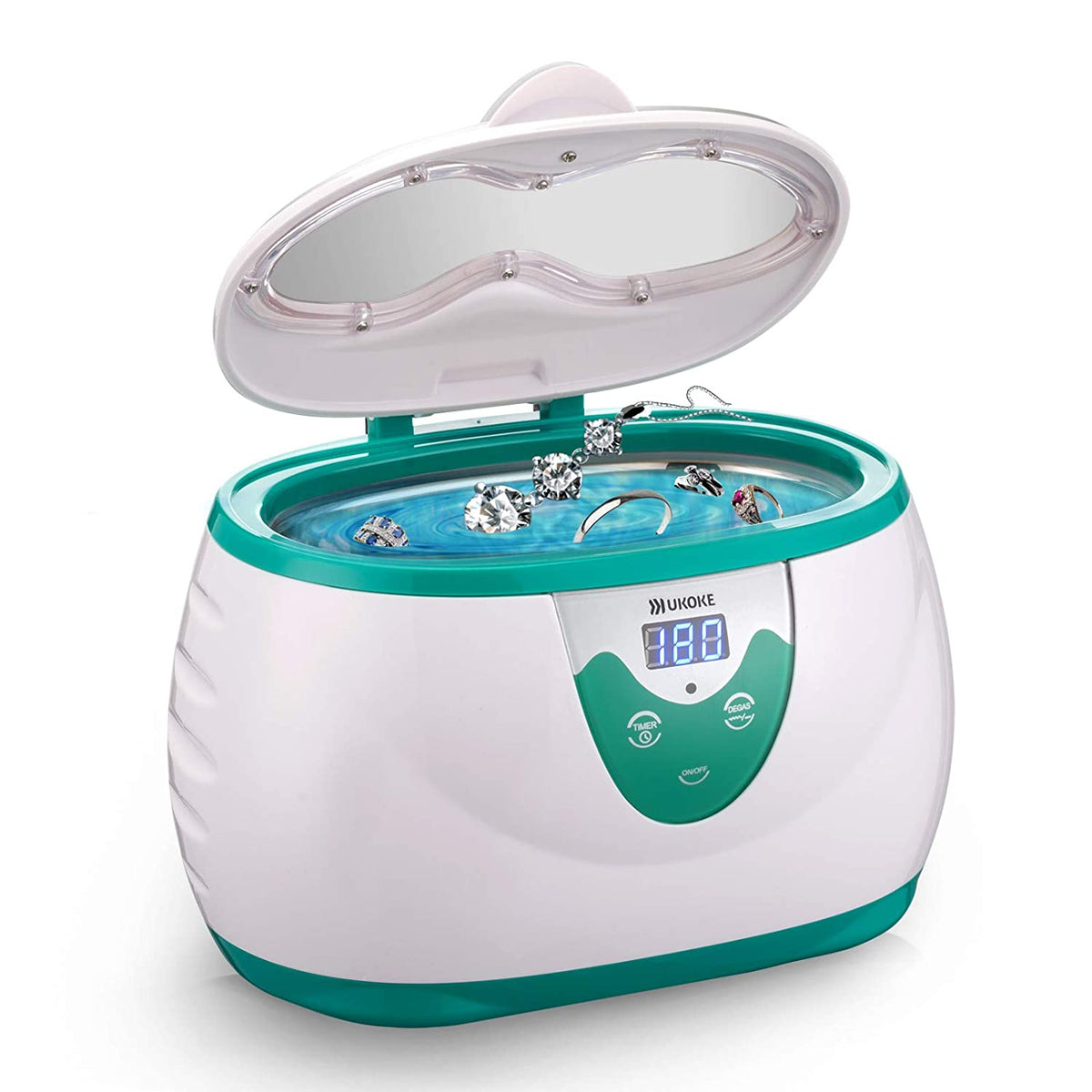
UKOKE UUC06G 0.6 L Ultrasonic Jewelry Cleaner, Green
Official listing: 0.6 L tank, digital timer and Degas function; 42,000 Hz. Use only for items whose care instructions permit ultrasonic cleaning.
Price: View current price (USD). Availability: check product page. Checked October 15, 2026; current price and availability could not be independently confirmed because the product page returned HTTP 429. Price and availability may change.
Sources
- Gemological Institute of America: Gems and Ultrasonic Cleaners
- GIA: Diamond Care and Cleaning Guide
- ZEISS: The right way to clean and care for glasses
- UKOKE UUC06G product page
This is general jewelry-care information, not an identification of a particular stone or treatment. When in doubt, keep the piece out of the ultrasonic cleaner until a qualified professional confirms a suitable method.