
How to Winterize a Garden Sprayer Before the First Freeze
Short answer: Before freezing weather, empty the sprayer and clean it exactly as its pesticide label and equipment manual require, then remove residual water from the tank and liquid path only using a method the manufacturer allows. Store the dry equipment in a protected, above-freezing place. There is no universal cleaning mixture or antifreeze recipe for every sprayer or chemical; never improvise one.
Image note: The cover is an AI-generated illustration, not a product photograph or a record of a cleaning test.
Why winterize before the first hard freeze?
Water left in a tank, hose, pump, wand or nozzle can freeze and expand. That can crack components or leave the sprayer unusable when you need it again. The safest timing is before the first forecast that could freeze the equipment where it is stored. A light frost may not freeze a sheltered shed, but do not rely on that distinction if the sprayer will sit outdoors overnight.
Start by identifying what was last in the tank. If it held pesticide, herbicide or another treatment, the product label controls how to use, clean, store and dispose of the material. The U.S. Environmental Protection Agency advises following pesticide storage instructions on the label and keeping pesticides in their original labeled containers. Never pour leftover concentrate or rinse water into a storm drain, sink or bare ground unless the label and local rules specifically allow that disposal method.
Clean the sprayer without guessing at chemicals
- Read the product label first. Use or dispose of remaining spray mixture as directed. Follow its equipment-cleaning directions, including any required cleaner, protective equipment or rinsing steps.
- Depressurize and power down as the manual directs. Disconnect removable power only if the instructions call for it. Do not open a pressurized tank or dismantle parts while the pump is running.
- Clean the whole liquid path. Follow the sprayer instructions for the tank, hose, wand, filters and nozzle. EPA training material for pesticide applicators emphasizes cleaning the full application system, not just the tank, while also following the chemical label. That principle is useful, but the precise procedure depends on the chemical and the specific equipment.
- Handle rinsate carefully. Keep rinse liquid contained and use, store or dispose of it as the label directs. Do not combine products or add bleach, ammonia, detergent, oil or another cleaner unless the label and sprayer manufacturer explicitly permit it. Different products can react or leave harmful residues.
- Drain and dry only as allowed. If the manual permits, empty accessible water and allow removable parts to dry. For a powered pump or internal passages, follow the model-specific storage steps; do not run a pump dry to force out liquid unless the manual explicitly says to.
What to do with a cordless garden sprayer
For example, UKOKE describes its 20V cordless garden sprayer as having a separable water tank and adjustable nozzle. Those features can make access and rinsing more convenient, but they do not establish which chemicals are compatible or how its pump should be winterized. Follow the manual supplied with your exact unit and the label for the liquid used. Do not infer a safe cleaning procedure from a product photo or from another sprayer model.
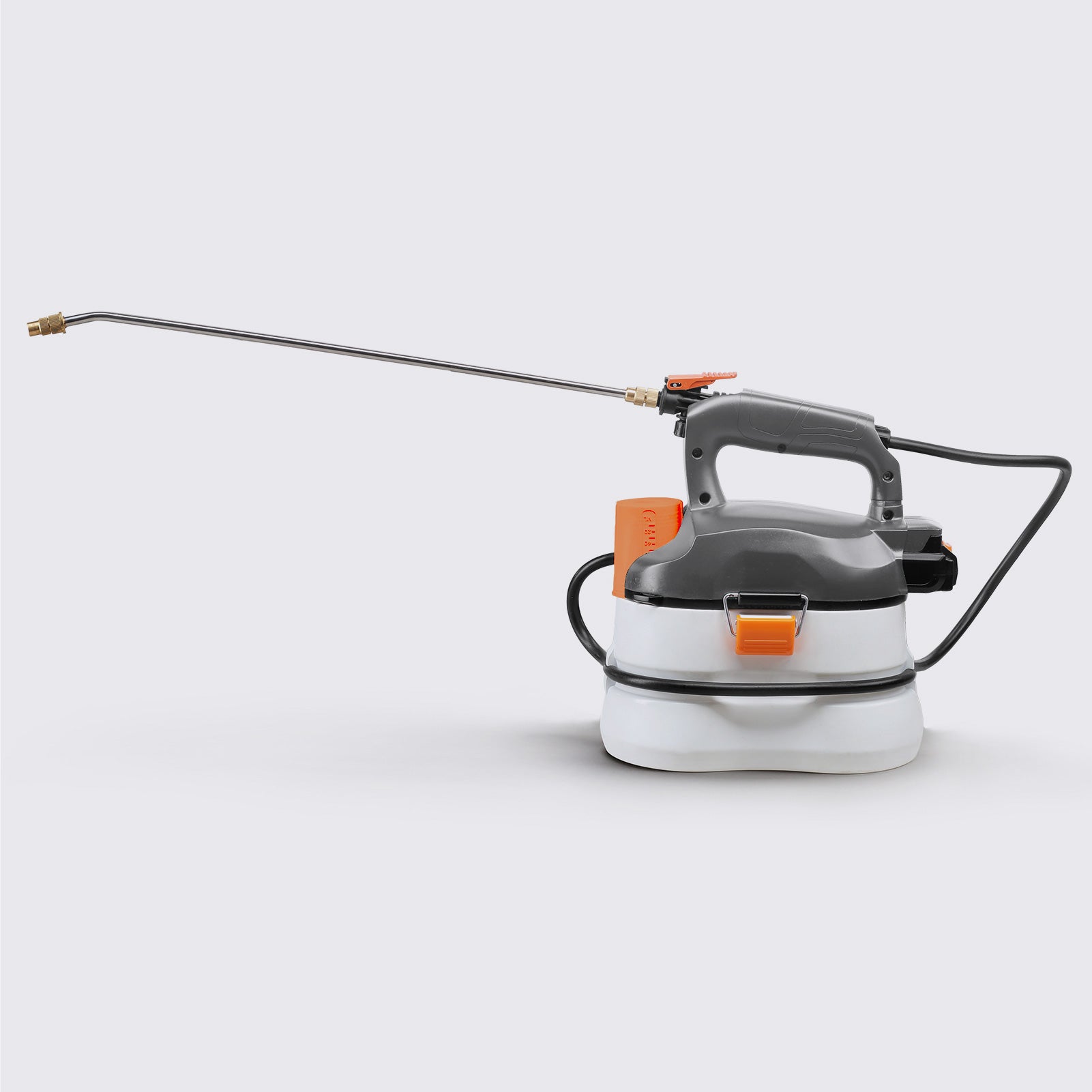
UKOKE Cordless Electric Power Garden Sprayer with 20V 2A Battery & Charger
Model shown on the official UKOKE page; the page lists a separable tank and adjustable nozzle. The current page listed $66.99 USD and showed sold out on October 21, 2026. Price and availability may change; see product page.
Store it dry and protected
Once the allowed cleaning and draining steps are complete, store the sprayer indoors in a dry location protected from freezing. Keep chemical products in their original labeled containers and store them separately according to their labels. Keep the sprayer out of reach of children and away from food, animal feed and living areas where the label requires. Remove and store the battery only if the equipment instructions say to do so; use the battery maker’s storage and charging directions rather than leaving it in an exposed shed.
If the sprayer manual recommends a specific winterizing fluid, confirm that it is approved for the pump and seals and compatible with the chemicals previously used. Do not substitute automotive antifreeze or a homemade solution. If instructions are missing, stop before adding anything and contact the manufacturer with the model number.
Quick pre-freeze checklist
- Identify the last liquid and read its label.
- Use the product-label cleaning and disposal instructions.
- Clean the tank and liquid path according to the equipment manual.
- Remove remaining water only with a manufacturer-approved method.
- Store the dry sprayer and battery as their manuals direct, protected from freezing.
These steps are general maintenance guidance, not a substitute for the specific sprayer manual or chemical label. When their directions differ from generic advice, follow the applicable label and manufacturer instructions.
Sources
- U.S. EPA: Storing Pesticides Safely
- U.S. EPA: National Pesticide Applicator Certification Core Manual, equipment cleaning and storage
- UKOKE product page: cordless garden sprayer
Prepared by Codex with AI assistance; not independently reviewed by a human.